Field notes
Where Food Journeys in Italy Come From
The history behind gourmet travel in Italy, from a First World War front on the Soca river to prosciutto towns, truffle forests and cellars past every border.
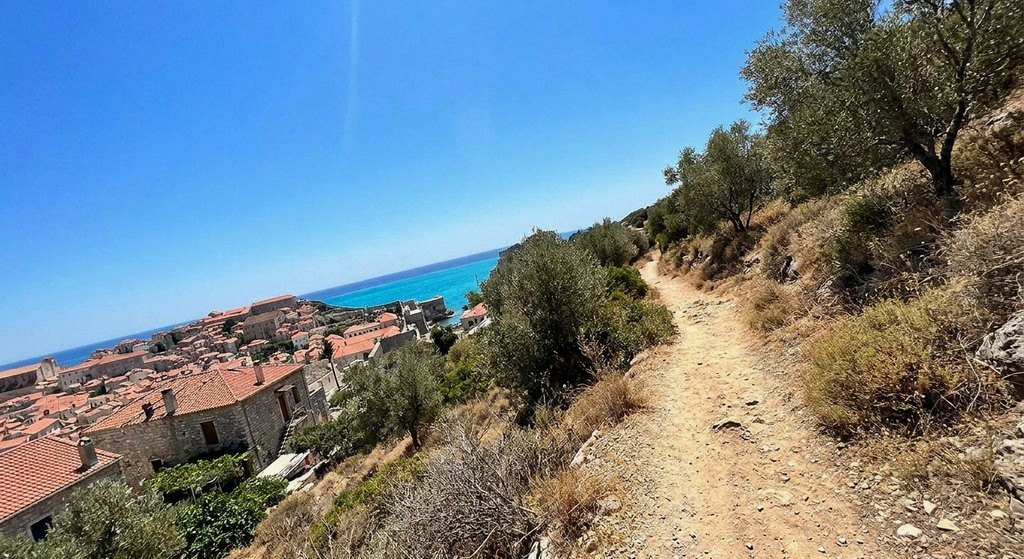
In 1918, a young ambulance driver named Ernest Hemingway came away from the front line along the Soca river in the north east of the country, and the valley later fed one of his novels. The road he took climbs from the coast through Trieste, the Istrian peninsula and the Friulian wine hills, and today the same corridor carries a different kind of traveller, one who stops at cheesemakers, truffle forests and family cellars. Understanding how that shift happened is the history of the region itself.
Before the roads: producers of the medieval hills
Long before tourism, the hills between the Adriatic and the Alps were divided among monasteries, lords and market towns, and each left a product behind. The prosciutto of San Daniele owes its character to the meeting of Alpine and Adriatic air in one small town, where producers still hang the hams in the same cool currents. In the forests below the Istrian hill town of Motovun, hunters and their dogs have searched for black and white truffles for centuries, and the reward still arrives at the table as a home-style lunch rather than a museum piece. On the slopes above the river Mirna, winemaking families cultivated the same terraces through every change of flag, which is why the rolling hills there are often compared to Tuscany.
The border years: three flags over one table
The twentieth century drew and redrew borders across this corridor, and the front between the Italian and Austrian armies on the Soca became one of the harshest theatres of the First World War. The same years sharpened the differences that travellers now come to taste: Istria kept its Venetian kitchens and its olive groves, Slovenia carried its farm restaurants and dumplings, and Friuli held onto its white wines, which international experts have ranked among the finest Sauvignons anywhere. Crossing between them today takes minutes, and a tasting can contrast the same grape grown on either side of the line, Italian on one slope and Slovenian on the other, in the hills of Goriska Brda.
Locals in the border valleys will tell you that the wars moved the flags but never moved the recipes, and one lunch on either side of the line is enough to believe them.
What survived, and where you can see it
The region's past remains on display, and it is the reason the routes here favour small producers over attractions. A cheesemaker in the WW1 battle country still produces the so-called drunken cheese, washed in pomace from the local vines, and demonstrates it to visitors. In Pula, the Roman amphitheatre of the first century stands in better condition than the Colosseum in Rome. The Lombard town of Cividale del Friuli keeps its UNESCO listing and its narrow lanes, and the basilica of Aquileia guards early medieval mosaics of a kind found nowhere else. Each one anchors a modern itinerary the way a fortress anchors a valley.
- San Daniele prosciutto, matured in one town where Alpine and Adriatic air meet
- Truffle hunts with hunters and dogs in the Motovun forest, seasonal and weather permitting
- Drunken cheese demonstrated in the hills that saw the Great War's battles
- The first century amphitheatre of Pula, and the Lombard streets of Cividale
From history to the modern table
What began as a corridor of armies became a corridor of kitchens. Farm restaurants in the Soca valley serve homemade lamb or fresh trout with rolled dumplings and a homemade spirit to finish, and one Slovenian table, famous for blending family tradition with experimental technique, has drawn international attention to the whole valley. The lesson of the region's history is that small producers outlasted every empire, and a week spent between Trieste, Istria, Ljubljana and the Friulian hills is simply the shortest way to sit at their tables. Start at the producer nearest the route you plan, and let the rest of the week follow the valleys.
Written by the Juniper Latitude team. Routes are checked on the ground and pages are edited in place when something changes. Spotted an error? Tell us and we will fix it.
Next step
Start with your dates
A short brief is enough. We reply with questions, a route sketch and what it would cost before you commit to anything.